What Is Hoodia Gordonii?
From the Kalahari sands to the pharmacy shelf: the complicated history of the world's most controversial succulent.
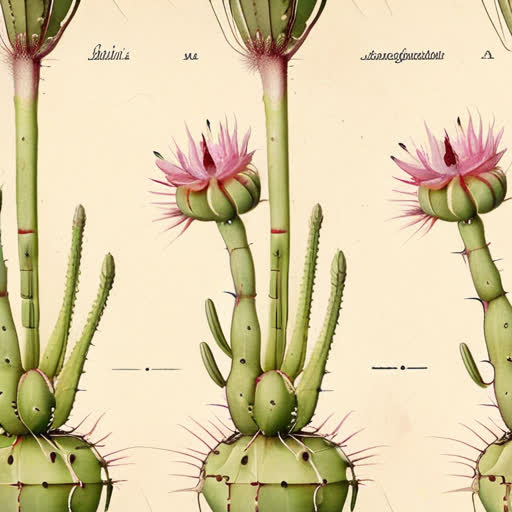
The Plant Logic
Hoodia gordonii is a leafless, spiny succulent that grows naturally in South Africa and Namibia. It looks remarkably like a cactus (often called a "pickle with spines"), but it actually belongs to the milkweed family (Apocynaceae).
For thousands of years, the San people of Southern Africa used the fresh stems of the plant to suppress hunger and thirst during long hunting expeditions in the harsh desert environment. They would cut off a stem, remove the spines, and eat the bitter flesh raw.
Authentic fresh Hoodia is described as tasting "like a slightly old, soapy gherkin." The bitterness is a key trait; sweet or neutral-tasting powders often indicate the product isn't real.
The "P57" Discovery
In the late 20th century, the Council for Scientific and Industrial Research (CSIR) in South Africa isolated what they believed to be the active ingredient: a steroidal glycoside named P57.
The theory was essentially that P57 tricked the brain (specifically the hypothalamus) into thinking the body had enough blood sugar, thus killing the appetite.
The Commercial Boom
Pharmaceutical giants Pfizer and Unilever both dipped their toes into developing Hoodia products. However, both eventually abandoned the projects. Unilever dropped it in 2008, citing safety concerns and the fact that the extract didn't meet their efficacy standards.
But the supplement industry didn't wait for the pharmaceutical giants. Marketing campaigns exploded, calling it a "miracle" and creating a demand so high that the natural population of the slow-growing plant was threatened with extinction.
Key Takeaways
| What We Know | What We Don't Know |
|---|---|
| The San people successfully used fresh stems for hunger suppression. | Does the dried powder retain any of the active P57 molecule? |
| P57 exists and affects rat brains in labs. | Does it work safely in humans at achievable doses? |
| Most commercial products tested in the 2000s were fake. | Is there ANY reliable source on the market today? |
References & Sources
- (2011). Phytochemical profiling of commercially important Hoodia species . South African Journal of Botany.
- (2004). Benefit sharing in practice: The San-CSIR Hoodia Benefit Sharing Agreement . Law, Environment and Development Journal.